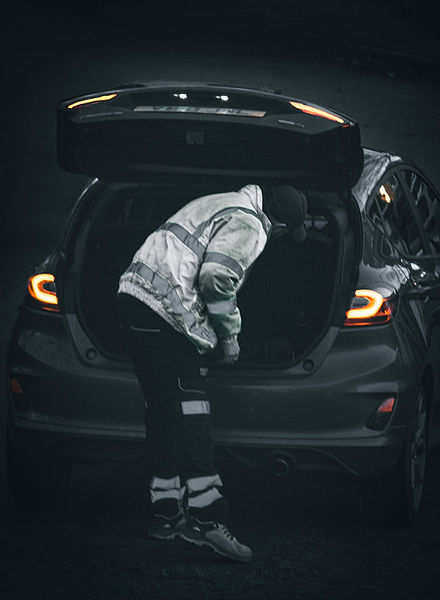
To start my project, I wanted to do a test photoshoot to see which elements were coming through in my images and solidify my theme. This shoot acted as a way of thinking visually to be able to physically see what i'm drawn and what felt effective with the brief. During the shoot, I photographed a wide range of subjects, including planes, birds, light reflections, people, everyday and "boring" objects, as well as images that relied heavily on negative space. I intentionally avoided assigning specific meanings while shooting, focusing instead on instinct, curiosity, and visual response. By photographing both moving subjects and static, overlooked objects, I was able to explore more contrasts between presence and absence, activity and stillness.
This process allowed me to challenge my usual instincts as a photographer. Rather than seeking traditionally "interesting" or emotionally explicit subjects, I experimented with ordinary scenes and minimal compositions, paying attention to what felt unresolved or open to interpretation. Negative space and moments where the subject felt distant or partially absent became recurring elements throughout the shoot.
Technically speaking, I wanted to focus on a number of technical and compositional approaches rather than working towards a finished outcome. This allowed me to assess how different subjects, lighting conditions, and spatial relationships could influence meaning and perception within an image.
I worked primarily with natural light, responding to it's changing conditions rather than controlling the environment. I experimented with shutter speed to either freeze motion or allow slight blur, depending on how much presence or distance I wanted the subject to convey.
I deliberately photographed "boring" or overlooked objects using minimal compositions. By isolating these objects or placing them within empty space, I explored how scale, placement, and context affect interpretation. And by focusing on these "boring" subjects, I felt that created questions for the viewer as to why is this being photographed? What does it mean? And why is it important to highlight?
Working mostly with a shutter speed of 1/125, aperture of f5.6, and an ISO of 600, this photoshoot functioned as a technical and visual experiment and through this, I was able to solidify my theme of absence.
In post production, I focused primarily on using lightroom to colour grade as a way of extending the narrative and interpretive qualities of each image. Rather than aiming for a realistic or neutral edit, I adjusted the colour tones, contrast, and overall atmosphere to give each photograph a specific emotional weight. This approach helped create a cohesive visual environment across the images, allowing them to exist within the same tonal and conceptual space.
Alongside colour grading, I experimented with using photoshop to produce double exposure images by layering two photographs from the shoot. This process was informed by the silhouettes captured during the photoshoot, which I saw as an opportunity to visually explore the idea of presence and absence simultaneously. By combining images and reducing the opacity of the figures, the silhouettes appear visible yet incomplete, reinforcing the sense that something is missing.
The transparency of the figures plays a key role in this effect. While the silhouettes remain identifiable, their lack of solidity suggests distance, impermanence, or absence. This created a visual tension between what can be seen and what cannot be fully grasped, encouraging the viewer to question the reality and permanence of the subject within the frame.
This technique is something I plan to carry further into my project and develop my skills with, using double exposure to further explore illusion, absence, and interpretation