


For my first photoshoot, I plan to visit a location that I know has a variety of natural elements such as trees, grass, and open areas. Rather than going in with a specific shot like, my intention is to spend time observing the environment and noticing what stands out visually, but also what goes unnoticed.
A key part of my project is exploring how change is constantly occurring in nature, even when we assume something is static. Because of this, i will focus on paying attention to small movements and subtle shifts in the environment, such as the way wind moves through leaves or grass.
During this shoot I also want to experiment with a tripod and slow shutter speeds. Taking inspiration from Susan derges' work, this will allow me to capture movement caused by natural forces like wind, effectively collaborating with the environment rather than simply documenting it.
With working with a slow shutter speed at times, I will need some kind of ND filter or substitute to make sure my images aren't overexposed and lose information. I also plan on taking both my 18-45mm and 45-200mm lenses to capture both wide shots and more macro details.
This shoot will act as an exploratory stage where I can test ideas, observe how natural elements behave over time, and begin identifying subjects that could be developed further throughout the project.


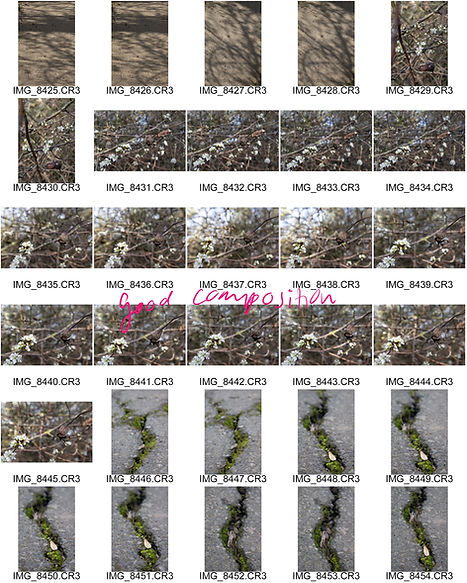

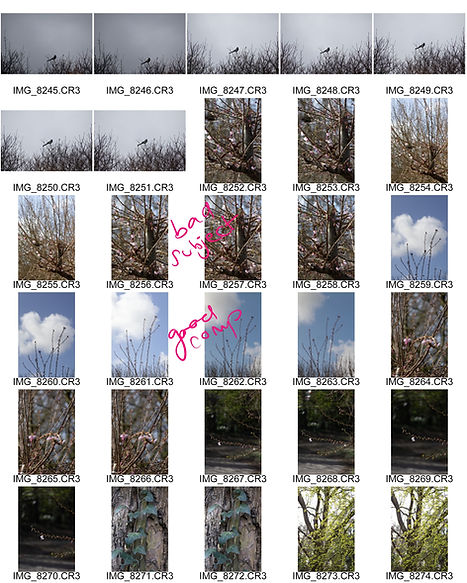


After researching multiple artists, developing my concept, and planning, I conducted my first photoshoot for this project on Wednesday (March 11th). I chose this day because it was the first opportunity where the sun was actively shining, which I wanted to help emphasise the small natural details I was hoping to find.
For this shoot, I brought my 18mm-45mm kit lens and a pair of sunglasses which I had planned to use incase I needed a substitute for an ND filter, given the strong sunlight I was working with. I walked around my local area, meaning this shoot didn't cost me anything and in total took around 45 minutes. I didn't go out with a specific subject in mind, instead focusing on the general concept of change in nature and observing what I noticed around me. During the shoot I photographed a variety of subjects including buds forming on branches, spring flowers, the last of the autumn leaves, and sunlight dappling across plants and surfaces.
One of the most interesting aspects of this shoot was how much I was forced to slow down and pay close attention to my surroundings. Many of the subjects I photographed were small details that would normally go unnoticed. For example, there was a small green plant growing from the ground that I likely would've never spotted if I had not been deliberately looking for subtle signs of change.
Technically, I worked with a low ISO, mainly between 100 and 300, as I wanted to maintain image quality and avoid unnecessary noise. I kept my aperture at f5.6, which gave me a shallow depth of field. This allowed me to isolate small details within the frame while softly blurring any distracting elements in the background. My shutter speed was typically around 1/125, occasionally increasing to 1/160 when there was stronger wind or when the light became brighter. I adjusted these settings while monitoring the light meter to maintain correct exposure and avoid any image information being lost to over exposure.
One image in particular stood out to my during this shoot. I noticed a dying plant hanging beside newly bloomed flowers, and I wanted to capture both within the same frame. The close proximity of these subjects created a clear juxtaposition between growth and decay, which strongly reflects the concept behind my project. It highlights how different stages of change can exist simultaneously within the same environment, allowing the said environment to exist in the way it does.
The weather conditions during the shoot were slightly challenging. It was mostly cloudy, with the sun appearing in short bursts, which made lighting inconsistent. There were several moments where I waited in one location for a few minutes until the clouds moved so I could capture the sunlight hitting the subject in the way I wanted. In some cases I felt that the images would have been stronger if the warm sunlight had been present.
Another limitation was that I only brought my kit lens. There were a few subjects that were difficult to reach or photograph in detail from where I was standing. In those situations a longer focal length lens, such as my 45-200mm, would've allowed me to capture the details more clearly. Because of this, next time I will be bringing both lenses to give me greater flexibility.
Overall, I feel that this shoot was a strong first step into exploring my project. Before starting, I spent a lot of time thinking about how I could effectively capture small, often overlooked changes in nature without the images simply becoming surface level "pretty pictures". While there is still room to develop the conceptual depth of the work and improve how clearly I communicate the idea, I feel that this shoot helped me begin to explore that direction and identify what I would like to continue developing further.

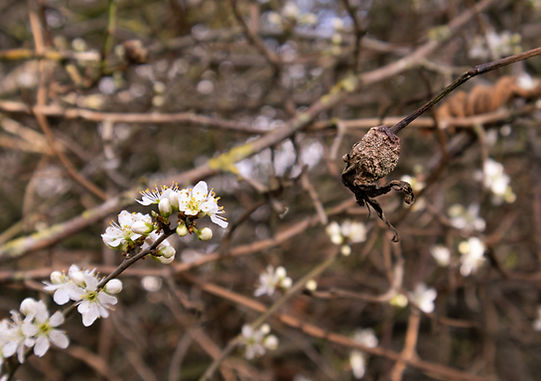
There was relatively little editing required for these images, as I was very conscious of the composition during the shoot itself. While photographing I focused on techniques such as the rule of thirds, the golden ratio, and carefully centering subjects against blurred backgrounds, which meant many of the images already felt balanced and intentional before editing.
Most of my editing focused on refining light and tonal balance rather than dramatically altering the photographs. In lightroom I mainly adjusted highlights, contrast, and levels to make sure the tones felt balances while also helping the images appear clear and visually striking. To further emphasise the subjects, I used masking to selectively increase highlights and clarity on subjects, while slightly reducing these in the background, helping guide the viewer's attention towards the important details and allowing the subjects to stand out more clearly within the frame.
I also used colour grading to shape the atmosphere of each image. While many of the photographs naturally contained warm tones associated with early spring sunlight, I did not apply the same adjustments across every image. Instead, I adjusted colours based on what each individual photograph needed in order to feel cohesive and visually effective.
For one particular image showing dappled sunlight across a fence, I made a more significant adjustment by cropping the photograph quite heavily. I wanted to decontextualise the scene, turning it from a straightforward image of a fence into something more abstract. By focusing purely on the patterns of light and shadow, the viewer is encouraged to look more closely at the shapes and textures created by the sunlight. This also reflects the concept behind my project, as the pattern of light is fleeting and unrepeatable, created by a specific moment of shifting sunlight.


