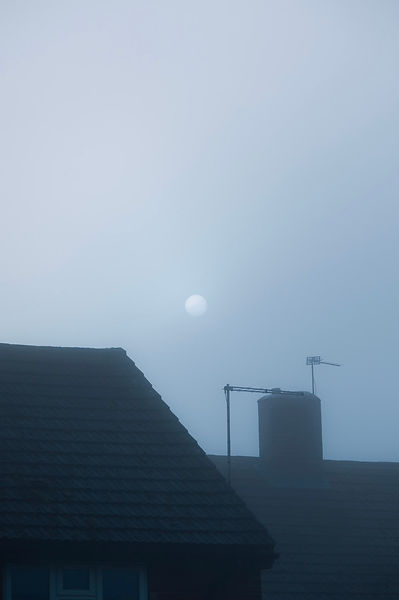
For this photoshoot, I plan to revisit the park location used in my previous shoot, with the intention of developing the ideas explored earlier rather than repeating them. After reflecting on my last outcomes, I want to further experiment and explore long exposure photography, specifically focusing on the swings, as they naturally lend themselves to movement and repetition and can act as a visual metaphor for presence, absence, and passing time.
I plan to shoot on Thursday (Jan 29) as it is supposed to be slightly foggy on this day and fog has become a reccuring visual and conceptual element within my project. I am aware that fog reflects a large amount of light due to its pale, diffused nature, which may result in overexposure, particularly when using longer shutter speeds, I didn't encounter this issue during my last shoot however I stuck to a shutter speed of 1/125 where as I plan to get as slow as 1/2 this time. As I do not have an ND filter, I plan to take sunglasses with me to place over the lens as an improvised method of reducing the amount of light entering the camera. I also plan to use a high aperture around 18-22 to help this issue and reduce light.
To support the use of long exposures, I plan to take a tripod in order to maintain stability and consistency across images. I intend to test a range of shutter speeds to explore how movement can be recorded in different ways, from subtle motion blur to more abstract distortion, and evaluate which best communicated the emotional tone of the scene.
Unlike my previous shoot, I plan to introduce a human subject into the images. This will allow me to explore the boundary between what constitutes a portrait and what does not, particularly when the subject is not clearly defined or is partially obscured through movement, fog , or framing. Rather than creating a traditional portrait, my intention is for the figure to feel ambiguous and secondary to the atmosphere, encouraging narrative interpretation rather than direct identification.
I plan to shoot using both my 18-45mm and 45-200mm lenses. The wider lens will allow me to capture environmental and landscape based images that emphasise negative space and atmosphere, while the zoom lens will be used for more constructed compositions and details, enabling greater control over framing and subject isolation.
Through this shoot, I aim to build a stronger narrative within my work by combining movement, environment, and the human presence. The images are intended to suggest themes of distance, uncertainty, and emotional absence rather than explicitly depicting them, leaving space for the viewer to project their own meaning onto the scenes. This shoot is designed to act as a progression towards my final outcomes, helping me refine my visual language and further solidify the conceptual direction of my project.
BTS
.jpg)
.jpg)


After my previous shoot, I reflected that if I were to revisit the location, I would experiment with long exposures, particularly focusing on the swings. This shoot was initially planned for Thursday (Jan 29th) however, on Wednesday morning it was unexpectedly extremely foggy. I made the decision to shoot that day instead, as the fog aligned strongly with the conceptual direction of my project and directly supported what I had previously discussed about fog's ability to evoke absence, ambiguity, and emotional distance within my images.
For this shoot, I brought a tripod in order to experiment with long exposure photography and asked a friend to assist as a subject, allowing me to explore the idea of portraiture within my work. Specifically, the question of what defines a portrait and where its boundaries lie, particularly when the subject is partially obscured, facing away, blurred, or secondary to the environment. Including a figure also enabled me to create deeper narrative, shifting the images away from purely environmental based and towards something more interpretive and emotionally driven.
Due to the brightness of the setting and the fogs ability to reflect large amounts of light, I anticipated that long exposure images would become overexposed. As I did not have an ND filter available, I improvised by taking sunglasses with me and placing them over the lens to reduce the amount of light entering the camera. This experimental approach felt appropriate within the context of my project, as it prioritised outcome and atmosphere over technical perfection. It turned out that the images were not overexposed and I could shoot without the sunglasses but I did experiment with both first to ensure I was getting the highest quality images possible and not losing any image information to overexposure.
For the long exposure images, I used an ISO of 100 and an aperture of f22 to accommodate the excess light from the slow shutter speed of 1/6 second. I initially tested a shutter speed of 1/2 second, however, I felt this resulted in movement that was too abstract, causing the subject and swing to lose all sense of form. By slightly increasing the shutter speed, I was able to retain enough structure while still capturing motion, which created a balance between clarity and distortion that I was more satisfied with.
For the remaining images, I used an ISO of 100, an aperture of f5.6, and a shutter speed of 1/160, using the camera's light meter to guide my exposure. These settings allowed me to maintain a more conventional photographic clarity while still working within the muted, diffused lighting created by the fog. Additionally, the low aperture allowed me to create a shallower depth of field and a more intense atmosphere due to the lack of clarity in the images.
I shot using both my 18-45mm lens and my 45-200mm lens. The wider lens was used primarily for landscape and environmental shots to emphasise space, distance, and negative space, while the zoom lens allowed me to focus more on constructed compositions and isolated details. This combination gave me greater flexibility and helped me vary the visual language of the shoot.
Overall, I am pleased with the outcomes of this photoshoot, as I feel it demonstrates a clear development from my previous work. The images move further towards an interpretive style rather than a purely descriptive one. Reflecting on Todd Hido's idea that he does not create meaning but instead "charges the air" for meaning to happen, I feel that these images establish a strong narrative foundation, allowing the viewer to project their own emotions and interpretations onto the work.
This shoot feels like a pivotal point in my project as it was an important progression for me to explore the idea of absence while actively containing a visible human presence. It has inspired me to continue exploring movement, obscured figures, and ambiguity as key visual tools, refining my work into a more resolved and conceptually cohesive series.
During editing, I made a conscious decision to keep compositional changes to a minimum. I did not need to do much cropping or restructuring of the images, as I was again particularly mindful of composition while shooting. This was intentional, as I wanted the final images to retain a sense of realism and immediacy, allowing the viewer to feel as though they are physically present within the scene rather than observing a constructed image.
My primary focus in editing was on colour and tone rather than form. I reduced vibrancy across the images, muting the colour palette while leaving small traces of colour visible. This allowed the scenes to remain recognisable and grounded in reality, reinforcing the idea that these moments are real and familiar even in emotionally ambiguous. The presence of subdued colour helps bridge the gap between emotional distance and accessibility.
I experimented with black and white editing and found the results visually pleasing however, they felt considerably more detached and inaccessible While detachment is a recurring theme within my work, black and white created too much separation between the viewer and the image. Removing colour entirely pushed the images into a more observational space, whereas I want the viewer to feel able to step into the scene and project their own emotions onto it. Retaining muted colour allowed for a more immersive, relatable, and emotionally open experience.
In addition to this, I wanted to ensure my response to the black and white imagery was not purely personal. To test this, I sent 2 friends the same image in both black and white and in a muted colour version, asking each of them which they found more powerful and which they felt more able to immerse themselves in.


Response 1:

Response 2:
It was interesting to hear the different responses on the pictures, one feeling that the muted colours were more immersive and accessible while the other being more drawn the black and white. Although the feedback was conflicting, it made me aware of the subjectivity involved in how images are interpreted. As my intention is to create imagery that viewers can project their own emotions and experiences onto, it became clear that not everyone will connect with a single visual style in the same way. The different preferences, personal experiences, and expectations that viewers bring to an image are what ultimately shape the narrative. As a result of this, I want to further explore black and white editing alongside colour in future work to investigate how different visual approaches can create different narratives and engage different audiences.
To further enhance this atmosphere this atmosphere, I decreased clarity across the images, softening edges and recusing sharpness to complement the fog and movement already present in camera. I also experimented with adjusting levels to achieve different finishes, subtly controlling contrast and tonal range to find a balance between softness and depth. These adjustments helped reinforce the interpretive quality of the images without making them feel overly stylised or artificial.
Overall, the editing process was deliberately restrained. Rather than transforming the images, my aim was to support what was already present, ensuring the final outcomes remained believable, immersive, and emotionally open to interpretation.