




Over the course of this project, I explored the concept of change through nature photography, whilst also challenging my own understanding of photography itself. Going into the project, I already knew that photographing nature was something I was both drawn to and confident in.
However, I was also aware that nature photography is an extremely explored genre, and because of this, I knew there was a risk of producing work that felt repetitive, aesthetically pleasing but ultimately lacking meaning or depth. Therefore, one of my main goals throughout the project was to push myself beyond simply taking “pretty” images and instead create a body of work that explored a more conceptual and underappreciated idea.
I began by questioning what change actually is. I became interested in whether something can still be considered changing if it is simply doing what it has always done, or what is expected of it. I also questioned whether change only exists once we notice or acknowledge it, and whether inevitability is the same as insignificance.
This became one of the most important ideas throughout my project and heavily influenced both my shoots and my final outcomes. As the project developed, I realised I was less interested in dramatic visible change and more interested in the way familiarity dulls attention. I became fascinated by how people stop noticing things they see every day, especially within nature, because they become expected and therefore almost invisible.
Through my work, I wanted viewers to spend longer looking at images, noticing details they may otherwise overlook, and experiencing familiar natural subjects as if seeing them for the first time again.
At the beginning of the project, I explored the work of artists including Andy Goldsworthy, Susan Derges, and Sam Taylor Wood. Researching a variety of artists helped me understand the different ways nature and change can be approached conceptually. Initially, I struggled to decide what direction to take and often found myself naturally gravitating towards aesthetically pleasing imagery rather than more conceptual outcomes.



Looking back at my earlier shoots, I can clearly see a mixture of visually attractive photographs alongside attempts at creating more thoughtful compositions. At first, I often preferred the “better looking” image, even if it carried less meaning. However, as the project progressed, I feel I became far more confident balancing both aesthetics and concept within a single image, which is something I had previously struggled with in my work.
Throughout the project, I explored a wide range of techniques, many of which pushed me outside of my comfort zone. One of my earlier experiments involved mixed media and collage making. Although I did not continue this process into my final outcomes, it became an important turning point within my project as it encouraged me to embrace imperfection and abstraction rather than relying purely on technically perfect images. It also helped me begin trusting my audience more, allowing viewers room for interpretation instead of presenting them with obvious imagery.
This experimentation eventually led me towards using slow shutter speeds to capture movement within nature. This was a major development within my work because, for the first time, I stopped viewing natural elements such as wind, movement, and changing light as obstacles and instead began seeing them as conceptual tools. Rather than fully controlling the image, I allowed nature itself to collaborate in creating the final outcome.
This idea of capturing multiple moments and changes within a single image led me towards experimenting with joiners inspired by David Hockney. However, rather than simply recreating Hockney’s approach, I adapted the idea to better suit my own concept by constructing images using photographs of the same subject taken weeks apart.
I found this technique particularly successful because it allowed me to directly show visible changes occurring within the same image, emphasising the contrast between different stages of growth, decay, weather, and time. These became some of the strongest conceptual pieces within my project and ultimately developed into my main final outcomes.
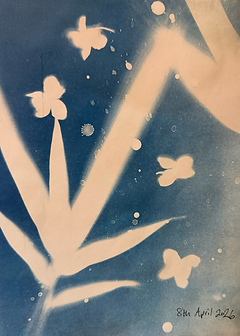
I also experimented with cyanotypes and sun paper, which allowed me to explore a far more hands on and physical approach to image making. I found the process interesting because it captured exact forms and shapes directly without relying on a camera. I later combined this experimentation with my joiner work by layering fragmented images onto cyanotypes to create additional perspectives and visual distortions.

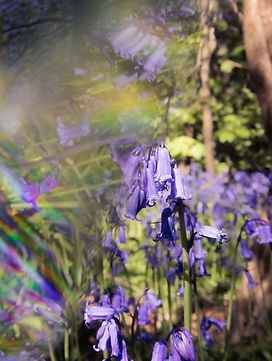

Another technique I explored for the first time was shooting through prisms. Initially, I found this process technically difficult, but over time it became one of my favourite experiments throughout the project. The prism images pushed me further away from my comfort zone of creating sharp, controlled photographs and instead introduced distortion, reflections, and fragmented perspectives into the frame.
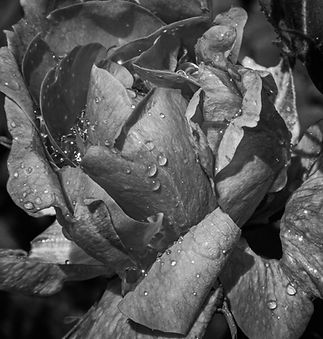

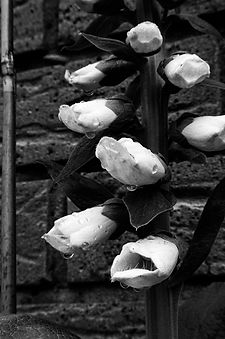
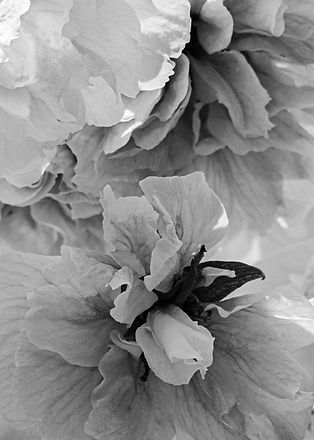
Alongside these softer colour images, I also explored black and white photography inspired by Imogen Cunningham and Edward Weston. Although black and white photography is outside of my usual visual style, I found it extremely useful conceptually. By removing colour, I was able to unfamiliarise natural subjects and encourage viewers to focus more closely on form, texture, shape, and detail rather than instantly recognising what they were looking at.
This directly linked back to my idea surrounding familiarity dulling attention. While the colour images explored softness, impermanence, and movement, the black and white images instead encouraged stillness and close observation. I feel the contrast between these two approaches became an important strength within my project, allowing me to explore multiple perspectives on change rather than presenting a single interpretation.
Technically, this project also significantly improved my confidence and understanding of camera settings and shooting conditions. Through experimenting with slow shutter speeds, macro photography, varying apertures, and difficult lighting conditions, I developed a far stronger understanding of how camera settings directly impact atmosphere, focus, movement, and detail. I became far more confident adapting settings during shoots depending on the environment and the conceptual outcome I wanted to achieve.
A major part of my project development was also my midpoint online exhibition. This was my first experience constructing an online gallery space and publicly presenting my work in a more professional format. Seeing the images displayed together helped me better understand the strengths and weaknesses within the series and allowed me to begin thinking more carefully about sequencing and presentation.
The audience feedback I received was particularly valuable because many viewers understood the deeper conceptual ideas behind the work rather than simply responding to the images aesthetically. This reassured me that the project was successfully communicating more than just visually pleasing nature photography.
One of the most important decisions I made throughout the project was allowing my concept to naturally develop rather than restricting myself to my initial idea. Instead of forcing the project to remain fixed, I allowed contradictions, experimentation, and new discoveries to shape the direction of the work. I think this openness ultimately led to stronger and more thoughtful outcomes.
A clear example of this can be seen in the contrast between my soft colour prism imagery and my sharp black and white macro work. While visually opposite, both approaches explore the same underlying ideas surrounding observation and change. The prism and slow shutter images reflect the fleeting, constantly shifting nature of the world around us, whereas the black and white images force viewers to pause and examine details they would otherwise miss. Together, they represent two different ways of understanding change and perception.
Another idea I introduced early into the project was the “12 week year” theory, focusing on how significantly things can change within a relatively short period of time. This became relevant not only within nature itself but also within my own growth as a photographer.


Looking back at my earliest shoots compared to my most recent work, I can clearly see how much my visual approach and conceptual thinking developed. I now pay far closer attention to details, textures, and forms within the environment that I would previously have overlooked. Beginning the project in February at the end of winter and finishing in May as summer approached also allowed me to directly document visible seasonal changes within nature itself, reinforcing my concept further.
When selecting my final images, I focused on choosing photographs that worked both conceptually and visually as a cohesive series. Although the images vary stylistically, they all communicate the same underlying message: that people often overlook the beauty, detail, and constant change happening around them because familiarity causes them to stop paying attention.
I selected my joiner pieces as the main focus because they directly show visible change occurring within the same image, making the concept impossible to ignore. I also included images of the same plant photographed weeks apart to emphasise gradual growth and transformation over time. My prism photographs explore reflection, impermanence, and layered perspectives, while my slow shutter imagery represents nature actively collaborating in the creation of the final image. Alongside these, my black and white photographs encourage viewers to slow down and engage more deeply with detail and form.
Ultimately, this project became about far more than simply photographing nature. It became an exploration of observation, familiarity, impermanence, and the human tendency to stop noticing the things we see every day. Throughout the project, I challenged myself creatively, technically, and conceptually, pushing beyond my comfort zone of creating purely aesthetic imagery and instead developing work that encourages thought, interpretation, and closer attention.
What is change?
Change exists constantly, whether we acknowledge it or not. Through this project, I wanted to remind viewers that nothing is truly obvious forever - it is easy to become so used to something beautiful that we forget it is beautiful at all.