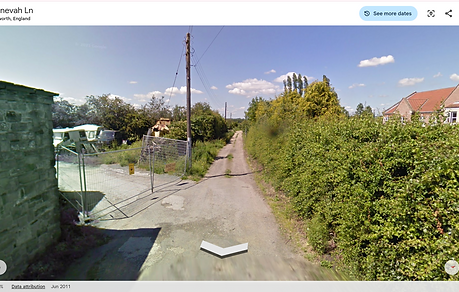


For this photoshoot, I plan to revisit the same locations used in my first shoot, which took place six weeks ago. The intention is to observe what changes have occurred within the environment over time, as well as reflect on what I now notice after spending time developing my project. This will allow me to compare both physical changes in nature and changes in my own awareness and attention to detail.
I plan to carry out this shoot on Tuesday 21st April, as the weather is forecast to be clear and sunny with no rain. I will shoot at approximately 3 - 4pm to take advantage of the harsher afternoon sunlight before it begins to soften later in the evening. This will allow me to explore how stronger, more direct light affects the appearance of the environment compared to my first shoot, where lighting conditions were different.
I will use both my 18mm - 45mm kit lens and my 45mm - 200mm zoom lens in order to capture a range of compositions. This will allow me to photograph wider environmental shots that reflect how we typically see a space, as well as more focused, zoomed in images that highlight details that are often overlooked. By working at multiple scales, I aim to show the contrast between what is immediately visible and what requires closer observation.
The purpose of this shoot is to approach the same environment in a different way. Rather than actively searching for subjects, I plan to focus on observing the space more naturally and responding to what stands out to me. This shift in approach will help demonstrate how my attention to detail has developed over the course of the project.
Additionally, I plan to attempt to recreate selected images from my previous shoot, particularly if the same subjects or plants are still present. This will allow me to directly compare images over time and visually track subtle changes within the environment.


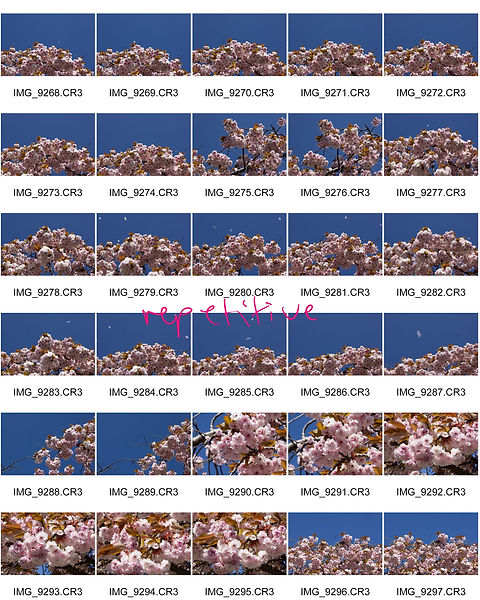
For this shoot, I revisited the same locations as my first shoot for this project. I wanted to not only observe what had physically changed in that time, but also reflect on how my own observations have changed. It wasn’t just about seeing difference in the environment, but noticing what I am now drawn to that I may have overlooked before.
I focused heavily on light throughout this shoot. Shooting at around 4pm on a clear day meant I was working with strong, direct sunlight, which is very different from my first shoot where I had to shoot much earlier due to the sun setting by this time. This allowed me to explore how light itself changes over time and how it affects what is visible. The harsher light created more defined shadows and contrast, which emphasised movement and change within the environment. Additionally, wind was very strong during this shoot which I had forgotten to check when planning a day, it did make it slightly harder to achieve a sharp focus however I managed to work alongside it.
I wanted to capture nature on multiple levels. This included wider shots of landscapes that reflect what we usually notice when looking around, mid range images of elements we might see if we pay closer attention, and macro shots focusing on details that often go completely unnoticed. I found the macro images to be the most successful, as they capture elements that would usually go under the radar and link most directly to my idea of unnoticed change.
To achieve this, I used both my 18 - 45mm kit lens and my 45 - 200mm zoom lens, switching between them depending on the composition I wanted. I also had to adjust my settings frequently due to the harsh sunlight, which varied in intensity depending on the area I was shooting in. I used an ISO of around 100 in brighter areas and increased it up to 1000 in more shadowed areas. Although I wouldn’t usually use such a high ISO, I wanted to maintain a relatively low aperture between f4.5 and f5.6 to isolate specific elements and remove background distractions, particularly in my more focused shots.
The strong wind during the shoot also impacted my approach. To ensure sharpness, I often used a shutter speed of around 1/180. However, I also wanted to work with the wind rather than against it, so I experimented with a slower shutter speed of around 1/60. This allowed for slight movement within the images without making them too abstract, creating a sense of motion and a more fleeting, impermanent quality. This felt like a development from my first shoot, where I focused on achieving complete control and sharpness in every image. In this shoot, I was more open to letting natural elements influence the outcome.
Additionally, I directly recreated an image from my first shoot, capturing the same plant growing from the ground. This allowed me to visually track the changes it had undergone over the six weeks. While the difference is subtle, it reinforces the idea that change is constant, even when it is not immediately obvious. Presenting these images together highlights how easily this type of change can go unnoticed.
Revisiting this location links back to the The 12 Week Year theory I explored at the start of my project, where I aimed to track change over a set period of time. At the 6 week point, the differences aren’t dramatic, but they’re there. Both in the environment and in how I approach it. I’m noticing smaller details and composing images more intentionally, which suggests that the most significant change so far might actually be in my awareness rather than the landscape itself.
This links strongly to my project idea that change is always happening, but it often requires a change in attention to recognise it.

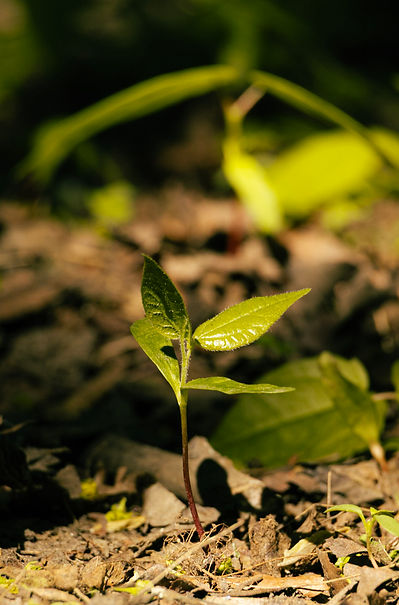
In terms of editing, I wanted to focus on enhancing detail and colour without losing the natural feel of the images. Using Lightroom, I created an adaptive preset that enhanced natural colours while also bringing out smaller details and textures. I used this preset as a base across all of my images to create a sense of consistency, and then adjusted each image individually depending on its lighting and composition. This included refining levels, colour balance, and effects such as clarity, grain, and sharpness. I think this approach worked well, as it gave the series a cohesive look while still allowing each image to maintain its own atmosphere.
I also experimented with cropping, particularly focusing on isolating smaller details within the images. By cropping into specific areas, I was able to decontextualise the subjects and remove them from their wider environment. This shifts the viewer’s perspective, as the images are no longer immediately read as “outdoor scenes” but instead as abstracted details and textures. This links strongly to my idea of unnoticed change, as it forces the viewer to engage more closely with elements they would usually overlook, rather than relying on the familiarity of a full landscape.
I am happy with how the images turned out overall. Each one explores a slightly different mood or feeling, particularly through the use of light and detail. The emphasis on smaller details and textures links strongly to my idea of unnoticed change, as these elements often go under the radar despite constantly shifting. The way these details are enhanced through editing reinforces the idea that these subtle changes can be made visible if attention is drawn to them.
The variation in compositions was also important within this shoot. Including both wider environmental images and more focused macro shots allowed me to explore the landscape in a more holistic way. The wider images reflect what we typically see when looking at a space, whereas the macro images highlight details that are often missed. I think this contrast is effective, as it visually represents the difference between what is immediately visible and what requires closer observation.
This approach has influenced how I want to develop my final outcome. I am considering combining a larger landscape image with a series of macro images taken from within that same space. This would allow me to show both the overall environment and the smaller, often overlooked details within it, reinforcing the idea that change is happening constantly but is not always noticed until it becomes more obvious on a larger scale.
This links back to my previous experiments using the joiner technique, where I combined two significantly different versions of the same landscape. In those images, change only became obvious when the two moments were directly compared. In this shoot, I feel I am developing that idea further by exploring both subtle and more noticeable changes within the same environment, rather than relying solely on obvious contrast.
Overall, this shoot demonstrates clear development from my earlier work. I feel that I am becoming less focused on controlling each image and more open to observing and responding to the environment. This shift reflects my growing understanding that change does not need to be dramatic to be significant - it is constant, layered, and often only becomes visible when we learn how to look for it.


