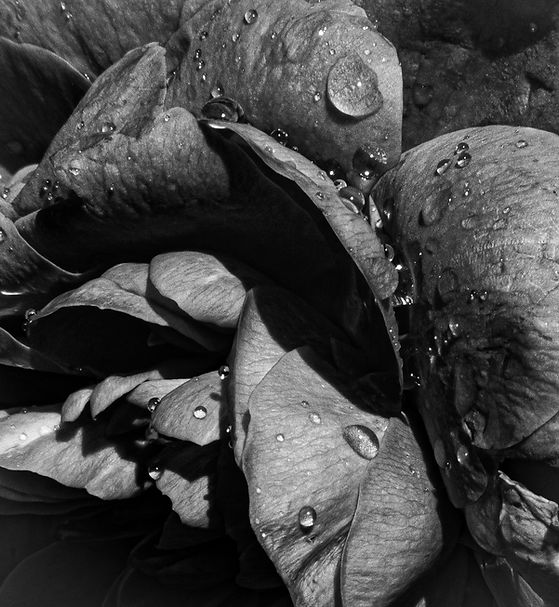
After researching the work of Imogen Cunningham and Edward Weston, I wanted to explore black and white photography and experiment further with a similar style in my own work. Both photographers focus heavily on texture, form, and abstraction, often making natural subjects appear unfamiliar until the viewer spends more time observing them. This links strongly to my own project, which explores paying closer attention to details that are often overlooked or ignored due to familiarity.


For this photoshoot, I focused primarily on flowers, as I found they contained the most intricate details and organic forms that would work effectively for close up and macro photography. I wanted to capture subjects that could later be edited into black and white, allowing texture, contrast, and shape to become the main focus rather than colour. Although I also photographed leaves, when reviewing the images during the shoot I felt that their forms were still too recognisable at first glance. In comparison, the flowers created more obscure and complex shapes that better reflected the unfamiliarity I was aiming to achieve through this experimentation.
The weather conditions were not what I had originally planned for. It had rained heavily during the morning, despite rain not being predicted on the weather app. However, due to project deadlines and the exhibition approaching, I decided to continue with the shoot regardless. In many ways, the unexpected rain actually benefited the images. The water droplets left on the flowers and plants created additional texture, reflections, and organic forms that added even more detail to capture.
This unexpectedly linked back to my project concept, as the exact droplets captured on those flowers were completely unrepeatable moments that otherwise would never have been noticed. By the time I am writing this evaluation, those droplets and even the flowers themselves will already have changed, which I find fascinating. The photographs become the only permanent record of those temporary details, reinforcing the themes of impermanence and unnoticed change throughout my project.
I brought both of my lenses with me during the shoot. My 18 - 45mm kit lens works best for close up and macro style photography, allowing me to capture fine details clearly. However, during previous shoots I often noticed subjects further away that I could not reach effectively, so I also brought my 45 - 200mm zoom lens to give myself more flexibility depending on the distance of the subject. I switched between the lenses throughout the shoot based on what I was photographing.
Technically, I used an aperture of f14 to ensure that details remained sharp and in focus. I was not concerned with creating a shallow depth of field because I already knew I would be tightly cropping many of the images during editing in order to further decontextualise and unfamiliarise the subjects. I also used a fast shutter speed of 1/120 to reduce motion blur caused by wind and camera shake, as preserving detail was essential for this shoot. Due to the darker weather conditions and the fact many of the plants were positioned in shadow, I adjusted my ISO between 400 and 800 depending on the lighting available.
Overall, I think the photoshoot was successful despite the poor weather conditions. Although sunny weather would have made shooting easier, I think working with the rain rather than against it allowed me to capture more unique and detailed images than I originally expected. It also pushed me to experiment outside of the bright sunny conditions I have mostly relied on throughout this project so far.
The rain introduced a softer, more atmospheric quality to the photographs while also physically changing the appearance of the subjects themselves through the droplets left behind. I think this development helped strengthen the conceptual side of my project as well as the visual outcomes, and the final images will work effectively within my exhibition and final collection.
For editing, I used Adobe Lightroom to select and edit the strongest images from the shoot. When choosing which photographs to develop further, I focused mainly on the sharpness of the focus and the complexity of the subject matter. The more intricate the textures, shapes, and forms appeared, the more successful I felt the image would be when edited in black and white. Because I planned to crop tightly into the photographs to decontextualise the subjects, it was important that the original images were as sharp and detailed as possible so the quality would remain strong after cropping.
During editing, I used black and white filters before individually adjusting the levels, contrast, highlights, and shadows for each image depending on what details I wanted to emphasise. I wanted the edits to exaggerate the textures and forms within the flowers, allowing them to become less recognisable as everyday natural objects and instead appear more abstract. Cropping became an important part of this process, as it removed surrounding context and forced greater attention onto the details themselves, similar to the work of Edward Weston and Imogen Cunningham.
Overall, I am happy with how the edited images turned out. Some of the photographs were not as high quality as I had originally hoped due to the darker weather conditions and the difficulty of capturing movement from wind while maintaining sharp focus. However, many of the final edits were successful and achieved the abstract effect I was aiming for. I think several of these images are strong enough to be included within my final outcomes and exhibition, particularly because they link both visually and conceptually to the themes of observation, impermanence, and unfamiliarity within my project.