For my latest experiments, I revisited the joiner style work that I had experimented with earlier on in the project, but this time incorporated my cyanotypes into the pieces and combined them with photographs.
I wanted to continue exploring fragmentation and the idea of piecing moments together as a way of showing time passing and things changing, while also developing the work further by combining physical and digital processes.
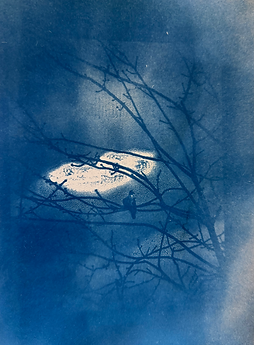


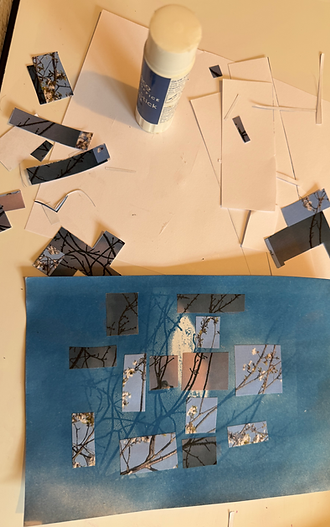

For the physical experiment, I chose a cyanotype of a tree with a bird because it was one of the more visually complex cyanotypes I had created, giving me more details and forms to work with compared to simpler pieces such as single flowers or leaves. I printed a digital joiner I had already created of the same image, cut it into smaller fragments after deciding which pieces I wanted to combine, and physically aligned and attached the pieces onto the cyanotype using a glue stick.
I enjoyed how tactile and physical this process was, as it became more about manually reconstructing the image rather than digitally arranging it on screen. It felt like a natural development from my earlier joiner work and linked well to my project them through the idea of collaborating with the images and with nature instead of controlling or observing through a lens.
However, despite enjoying the process, I found that working physically gave me much less flexibility than working digitally. Even though I printed the image in A5 to match with the cyanotype proportions, the fragments did not align as seamlessly as I had intended due to the slight scale and positioning differences. Because of this, I feel that the final outcome looks more cluttered and messy than carefully reconstructed. While I think the experiment itself was valuable, I do not feel that this specific outcome is successful enough for my final images.
If I were to continue developing this idea, I would work on a much larger scale so that more image detail could be retained and the fragmentation would feel more intentional rather than overcrowded.


For the other pieces, similarly to my first attempt at this style, I used Procreate to digitally select and arrange fragments of the images together. I experimented with a variety of cyanotypes that I felt would visually and conceptually work well. One of these involved a single flower cyanotype combined with photographic fragments. I felt this piece was successful because it explored detail effectively and the contrasting colours created a strong complementary palette. The bright yellow flower fragments against the deep blue cyanotype stood out clearly from one another while still feeling cohesive. I think this piece worked visually because both images were vibrant individually, but the contrast between them allowed the fragmented composition to remain readable and balanced.
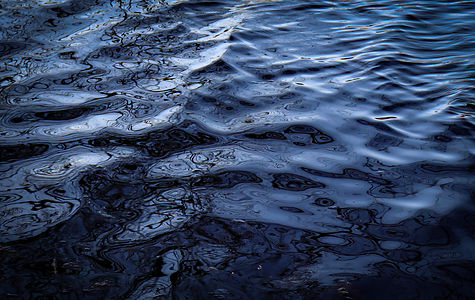
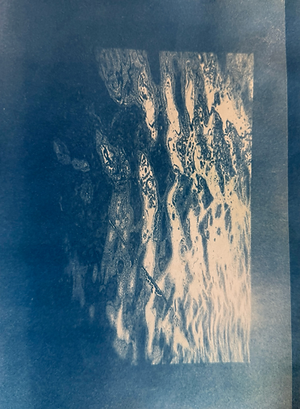
I also experimented with water imagery because I wanted to explore something more abstract and see how the blue tones of the cyanotypes interacted with the blue tones already present within the water photograph. Although the idea linked well conceptually, I found that the colours blended together too much visually. Despite being different shades of blue, they became difficult to distinguish from one another, making the borders between image fragments less clear. This also made editing more difficult because the pieces visually merged together rather than contrasting. While I like the atmospheric quality of the outcome, I think it lacks the clarity and structure that made some of the other experiments more successful.


Another experiment involved revisiting the cyanotype of branches that I had previously turned into a digital joiner. Similar to the original version, I found this experiment successful both visually and conceptually. The three combined images each hold different but cohesive colour palettes, which allows the fragments to stand apart from one another while still working together as a whole image. I also think this piece works most successfully with my overall project theme because the branches visibly change between the different images through growth and seasonal development. Rather than simply fragmenting an image aesthetically, the fragmentation here becomes evidence of time passing and physical transformation.


Additionally, I wanted to reverse the process by placing cyanotype fragments onto a digital joiner rather than placing photographic fragments onto the cyanotype. I found this outcome visually interesting and eye catching, particularly because of the layering of textures and processes.
However, due to the amount of fragmented images included within the composition, I think the piece becomes overly busy and harder to interpret clearly. It almost overwhelms the viewer initially because there is so much visual information competing within the frame. Despite this, I still think the piece conceptually links well to my project because it suggests an even larger span of time and change through the inclusion of multiple stages and fragments of the same subject.


Finally, I experimented with combining two cyanotypes made from the same plant across two days. On the first day, I created a cyanotype using the freshly picked plant, and on the second day I recreated the same composition using the same plant after it had begun to wilt and die. Over the course of the day, the shape and structure of the plant had noticeably changed, which resulted in a visibly altered cyanotype despite using the same arrangement. I combined these into a joiner inspired piece to directly explore physical change over time.
Although this is probably the least visually successful piece in my opinion, I think it is conceptually one of the strongest within my project because it acts as a literal physical representation of change occurring naturally and inevitably. The work documents transformation in real time rather than simply implying it.
Overall, I found this experiment highly useful in progressing my project. Incorporating cyanotypes into the joiner process felt like a natural development and allowed me to experiment with combining different image making methods, textures, and timeframes.
While I do not currently think these pieces will become my final outcomes, they helped me further understand what visual direction I want my final images to take. Although the experiments are conceptually strong and clearly linked to my theme, I want my final images to feel not only thoughtful and experimental, but also visually refined and cohesive.
These experiments helped me realise that balance between concept and aesthetic is important within my project, and that successful work for me is where both are equally strong rather than one overpowering the other.